The Teacher from Patna Who Dodged a Scam: The Power of Verification
The greatest hazard in personal finance is rarely a broad market correction; it is acting on an unverified tip from an unvetted source. SEBI equips investors with practical tools to verify credentials before committing capital
In Patna, a high school teacher received an unsolicited message advertising an exclusive equity investment opportunity. The counterparty projected complete market authority, presenting institutional charts and proposing immediate enrolment with no paperwork. All that was required was an instant funds transfer to a designated UPI ID.
The proposition appeared compelling. However, before authorizing the transaction, he paused to verify the credentials.
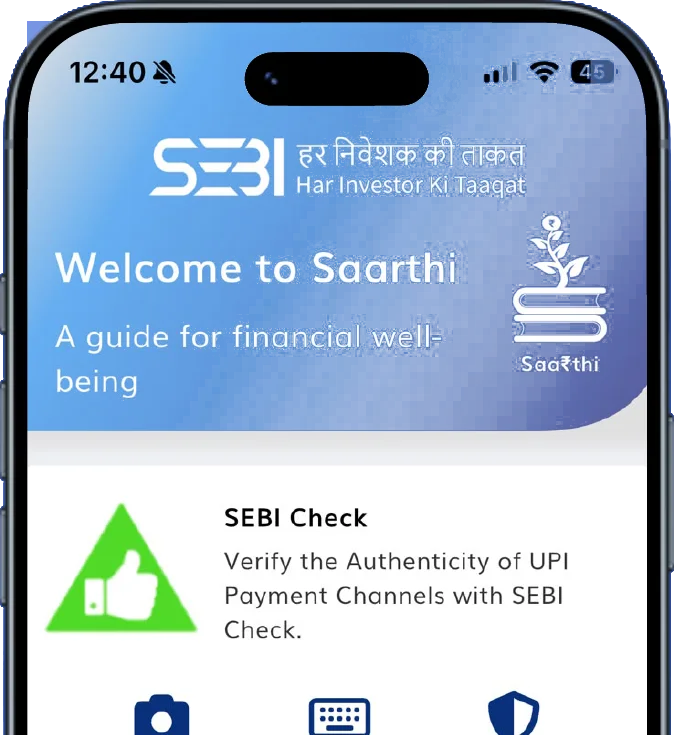
Instead of sending funds immediately, he evaluated the payment recipient using SEBI Check. The provided UPI ID failed to match any registered banking record associated with authorized SEBI intermediaries. Recognizing the red flag, he terminated communication immediately, successfully safeguarding his life savings.
How SEBI Check Safeguards Investors
Fraudulent actors rely on urgency, pressurising victims with claims of 'limited-window opportunities' or impersonating authorized corporate representatives.
SEBI Check provides an essential defense mechanism, allowing investors to verify the authenticity of securities market intermediaries before initiating payments. Investors can validate:
- Intermediary UPI IDs.
- Payment QR codes.
- Institutional bank account numbers and IFSC codes prior to executing NEFT/RTGS transfers.
Warning Signs of Investment Fraud
- Guaranteed or Unusually High Returns: Any proposition assuring risk-free profits in securities market is fraudulent.
- Artificial Urgency: Coercive demands to transfer funds immediately to create FOMO (fear of missing out).
- Third-Party Bank Transfers: Requests to transfer money to individual personal accounts rather than regulated corporate brokerage accounts.
- Unsolicited Outreach: Contact via private messaging groups from unknown individuals claiming proprietary market models.
SEBI CVV: Three Simple Checks Before You Invest
In a digital investment environment, knowing who you are dealing with is just as important as understanding where you are investing. SEBI’s CVV framework makes this easier with three simple steps: Check, Validate and Verify.
- Check the bank account details of a SEBI-registered intermediary using SEBI Check Tool.
- Validate the UPI ID by looking for the exclusive @valid handle used by SEBI-registered investor-facing intermediaries.
- Verify stock trading apps by looking for the Verified label on the Google Play Store.
Together, these checks provide an additional layer of protection and help investors identify genuine channels before making a payment or investing. As a simple rule: Check. Validate. Verify. Before you invest.
Disclaimer: This content is for awareness purposes only.